
by Lynette Charters
Also published on page 8 of the Fall/Winter print edition of Oly Arts #37

Stories of Indigenous Present, Re-imagining Indigenous Futures,
Curated by Mikaela Shafer in partnership with Indigenous Creatives Collective
The name Temporal references the here and now. Coast Salish Museum of Fine Art observes that Museums portray Indigenous people most often in the past tense, like relics disconnected from modern life. That disconnection is a form of censorship. Indigenous people are seen as separate from their art, their culture, and confined to however others choose to see them. CSMoFA are asking themselves the question:
“What does NOW and a FUTURE look when only WE define us?”
The show is full of real people and stories of current indigenous people, using their own voices in their own space. Envisioning a future where indigenous people exist in the here and now on their own terms. CSMoFA has taken over TCMoFA to represent Tribal Nations in the Northwest.
“We are here, we have been here, we will always be here.”
Coast Salish Museum of Fine Art is the art space shared with TCMoFA. Mikaela Shafer is well-healed as a local fine artist with many awards to her name. She has branched out in the last few years curating shows for SPSCC, TCMoFA, the NACF in Portland, All My Relations Art Gallery, Bar Francis, TAS, and Lantern Records.
Shafer has been involved with CSMoFA since their outset in 2023. The first show was juried, the second curated by Epiphany Couch, and the last two shows have been curated by Shafer alone. CSMoFA was created by TCMoFA, but since last year she says CSMoFA has partnered with Indigenous Creatives Collective (see link in the LEARN MORE section) and Indigenous Creatives have had full autonomy to curate shows free of the limitation of traditional museum and gallery structures. This ensures Indigenous artists are amplified and supported, and participating artists are paid. Shafer is well known for putting together beautiful and challenging shows. Her professionalism, her eye for detail and commitment to quality never fails. This is sure to be a noteworthy show.
She says: “The artists in the show are diverse and bring new, exciting perspectives to the museum. This show is all about Indigenous futurism, imagining a world where indigenous people are at the forefront, in control, and designing our world.”
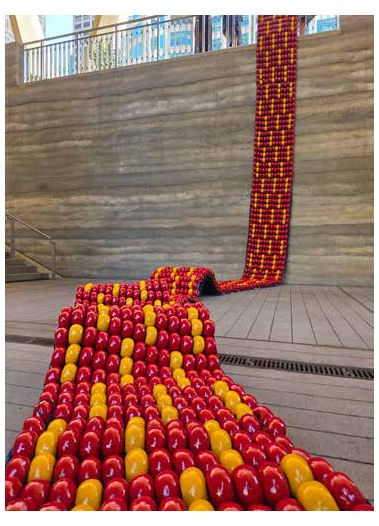
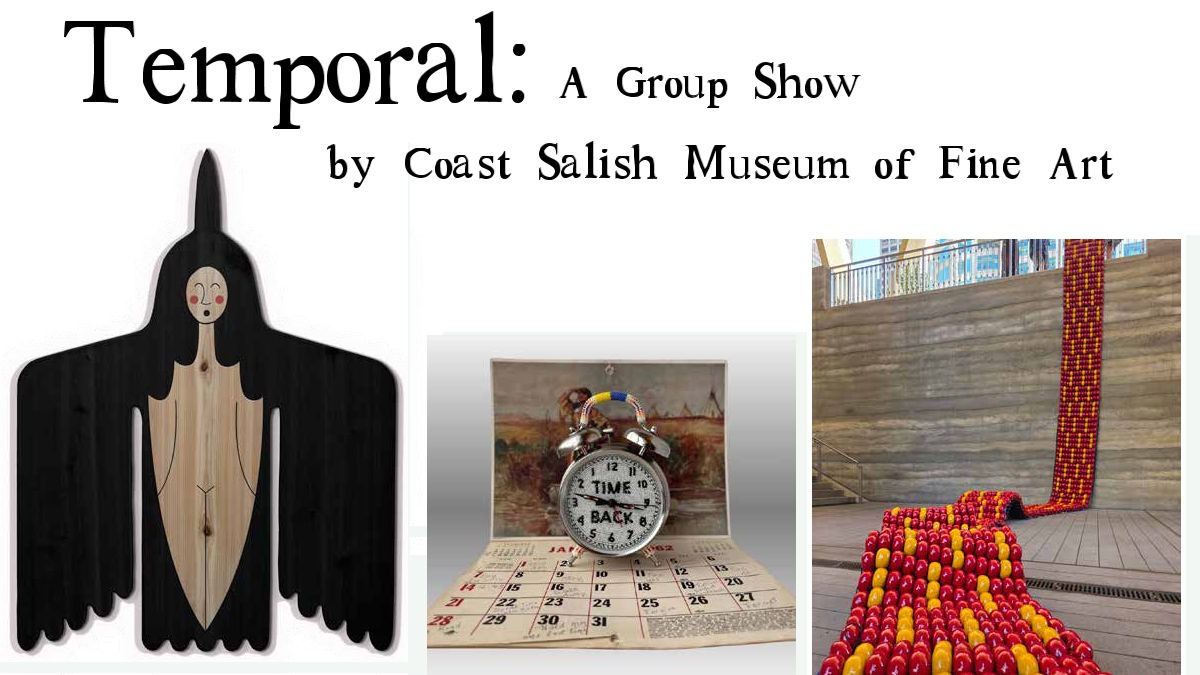
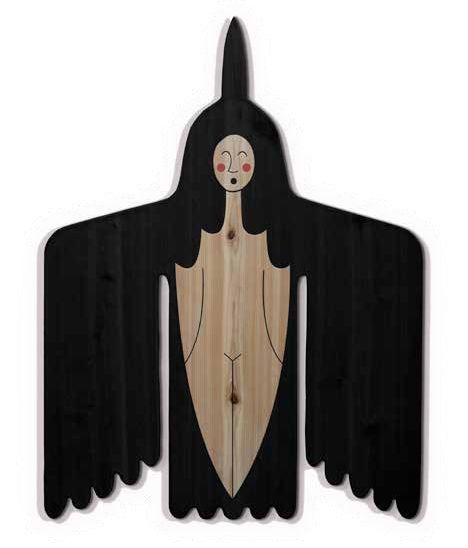
Works will include impressive larger-than-life art pieces such as a giant beadwork called “The Long Walk” by Tammie Dupuis (Confederated Salish and Kootenai Tribes of the Flathead Reservation). Shafer tells us it will cascade from the ceiling down to and across the floor. This piece will be shown along with her piece called “War Shirt,” and this is the artist’s description:
“In this work, I call back to the war shirts of the Plains tribes on which protective painted motifs and items were applied. These shirts were meant to protect the warrior in battle by deflecting weapons and giving them strength. In this piece, the faces represent my ancestors and relatives whose support in life and memory in death give me strength as a mixed blood person and as an artist expressing both Indigenous and non-Indigenous ways of seeing and making.”
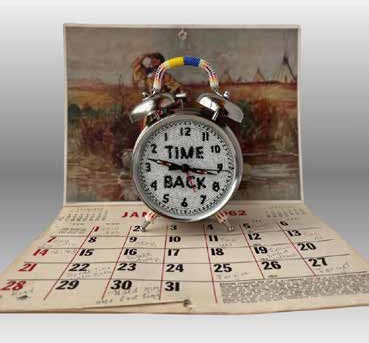
Cynthia Masterson (Comanche) will be showing beaded household objects, she has interactive beaded vending machines so that visitors can get their own beads and join in. She will also have a digital video piece. One of her beadwork pieces is named “Game of Telephone,” which will allow visitors to make a call and leave a message, she describes her work:
“This restored Western Electric candlestick telephone is an evolving piece intended to demonstrate two similar but slightly different bead weaving styles and show three bead sizes. Peyote beadwork is widely misunderstood due to inconsistent naming protocols and difficulty distinguishing the multitude of styles,”
During the opening, Shafer says that one of their installation artists, Megita Denton (Tap Pilam Coahuiltecan), will be performing a piece that visitors may not realize they are part of at first. She doesn’t want to give too much away about this piece, but it will prompt visitors to realize and acknowledge whose land they’re living on, and what they may owe by being here.
Shafer says: “Essentially, this entire exhibit is a call to action and a dream. It envisions a future where Indigenous people are the caretakers and creators of our world. What does it look like when we are given back all that has been taken from us? Visitors will feel like welcome intruders, slightly uncomfortable but curious and intrigued. Indigenous visitors will feel welcomed home, like they are getting a glimpse into their future descendants’ wildest dreams.”
Shafer has curated a divergent selection of thoughtfully executed artworks from Indigenous Coast Salish artists. These shows are always a gift because they open lines of communication between communities within the Olympia region, it is important to view art from the lesser reported perspective; through these shows we are more enlightened with a more three-dimensional idea of who we are as a community, and of the land where we live. That First Nations issues are less reported is a travesty that needs correcting.
WHAT:
Temporal a group show by CSMoFA
WHERE:
120 Olympia Ave NE
WHEN:
Oct through Dec, Opening date Oct 2, reception 6-9 p.m. Fridays 2-6 p.m., (2-9p first Fridays), Saturday and Sunday 12-4 p.m.
HOW MUCH: Free
LEARN MORE:
https://www.tcmofa.org/upcoming – https://www.indigenouscreatives.org/engage